
Football Training at Home: 6 Simple Drills for Young Kenyan Players
No academy, no problem. Here are six simple football drills young players can do with one ball and a small space, plus a weekly routine to follow.
By
Scorer254 Editorial Desk
Section
Football
Status
Published article
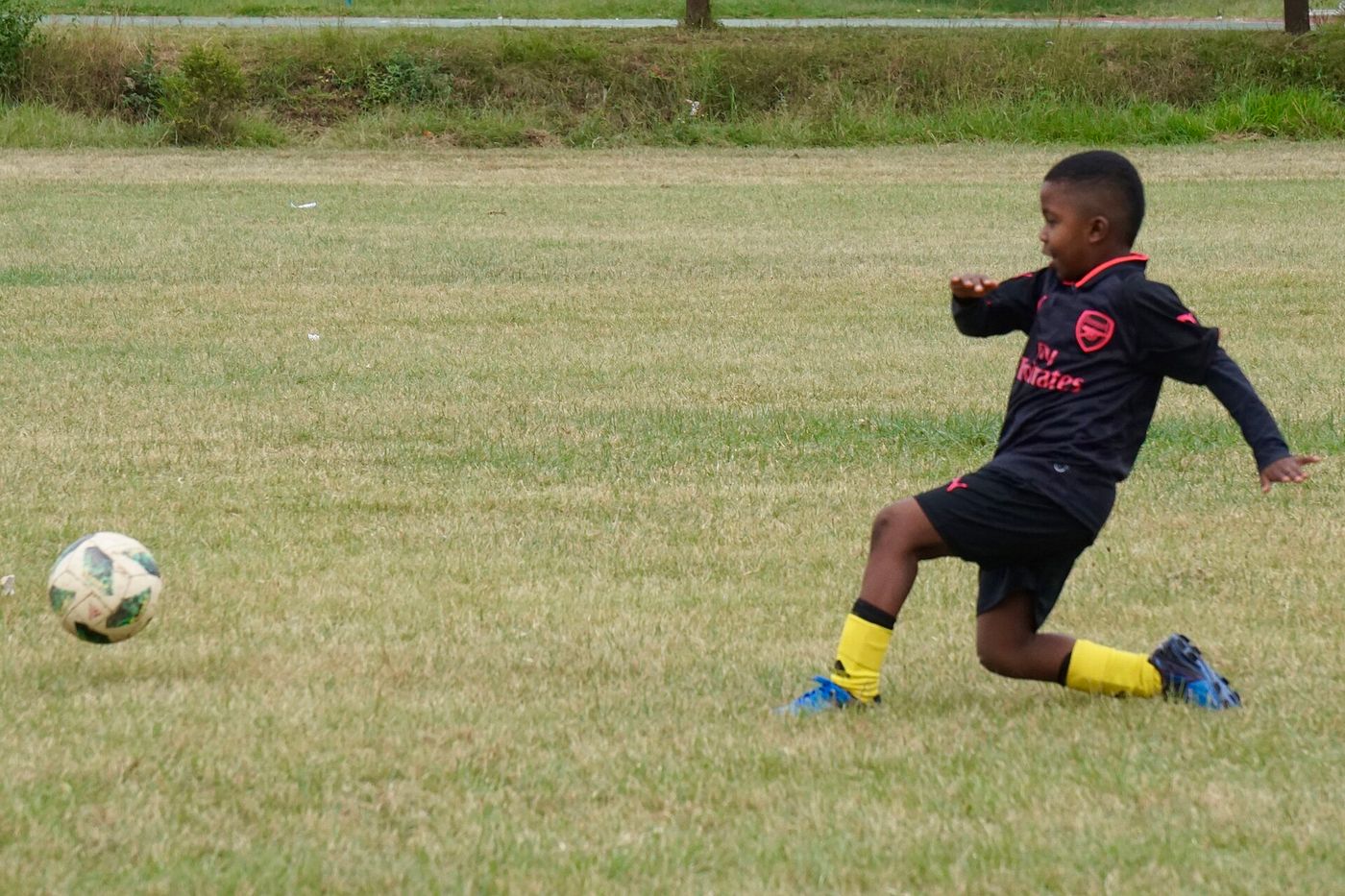
Photo: Dorcas Cheng-Tozun / Wikimedia Commons / CC BY-SA 4.0
You do not need a full pitch or an expensive academy to improve at football. Many of the best technical habits are built alone, with a ball and a small space behind the house, in a compound or on the school field. These six football drills for young players are simple, safe and need almost no equipment.
Before you start: warm up
Spend five to ten minutes jogging lightly, doing leg swings and stretching your calves, hamstrings and hips. Drink water, wear proper shoes and stop if anything hurts.
1. Toe taps and ball mastery
Stand over the ball and gently tap the top of it with alternating feet. Do it for 30 seconds, rest, and repeat. This builds touch, balance and confidence on the ball.
2. Inside-outside dribbling
Push the ball side to side with the inside and outside of one foot, then the other, while walking forward slowly. Use stones, bottles or shoes as markers and weave through them.
3. Wall passing
Find a safe, solid wall and pass the ball against it using the inside of your foot. Receive it with one touch, then pass again. Work on both feet. This trains passing accuracy and first touch.
4. Juggling
Try to keep the ball in the air using your feet, thighs and shoulders. Start by counting how many touches you can make, then try to beat your own record each week.
5. Cone or bottle slalom
Set five to eight markers in a line and dribble through them, first slowly, then faster. Keep the ball close and your head up. Use both feet.
6. Shuttle runs for speed and stamina
Mark two lines about 15 to 20 metres apart and run between them, touching each line. Rest between rounds. Football needs repeated short sprints, and this builds that habit.
A simple weekly routine
- Three to four days a week: 30 to 45 minutes of drills from the list above.
- One day: play a match or a small game with friends.
- At least one or two full rest days so your body can recover.
Tips for parents and young players
Train in a safe place away from traffic, and avoid training in the hottest part of the day. Good food, enough sleep and keeping up with schoolwork matter just as much as drills. If your child is serious about the game, look for a registered local team or genuine academy and watch a session before signing up.
How to track your progress
Keep a simple notebook or phone note of your sessions. Write down your best juggling record, how long the slalom takes and how many wall passes you complete in a minute with each foot. Check the numbers every two weeks. Seeing steady improvement keeps you motivated and shows which skills still need work.
Train your weaker foot on purpose. Most young players favour one side, so try to do at least half of every drill with the foot you use less. Coaches at academy trials notice players who are comfortable on both feet.
Frequently asked questions
Can I improve at football by training alone?
Yes. Solo drills improve touch, balance and fitness. To develop decision-making and teamwork, you also need regular games with other players.
How long should a young player train each day?
For most young players, 30 to 45 minutes of focused work a few times a week is enough. Quality and consistency matter more than long sessions. If you have any health concerns, check with a doctor first.